"Passive income" gets thrown around a lot these days, usually attached to something that turns out to be neither passive nor income. But when it comes to land, the concept actually works — if you pick the right approach.
The key distinction: truly passive land income means you don't need to be physically present, you don't need employees, and the revenue (or asset growth) happens whether you're paying attention or not. By that standard, most "farming" ideas don't qualify. But a few strategies genuinely do.
Here are the ones that actually make sense for Canadian landowners who want their property producing without becoming a full-time job.
What "Passive" Realistically Means for Land
Let's calibrate expectations. Nothing is 100% passive. Even rental properties — the poster child for passive income — require tenant management, repairs, and paperwork. Land is no different. There's always some involvement.
But there's a massive difference between "check on it once a month" and "work it 40 hours a week." The strategies below fall firmly on the low-effort side of that spectrum. We're talking hours per year, not hours per day.
Strategy 1: Farm Lease
The simplest. If your land is arable, lease it to a working farmer. They do all the work, you collect rent. Depending on location and soil quality, you might see $30 to $275 per acre per year.
Your time investment: one lease agreement, one cheque deposit per year, occasional conversations with your tenant. That's about as passive as income gets.
The limitation: this only works if the land is desirable for farming and there's a tenant available. Marginal land in remote areas won't lease for much — if it leases at all.
Strategy 2: Hunting or Recreational Lease
In many parts of Canada, especially areas with active hunting culture, you can lease your land for hunting access. Deer, moose, waterfowl — if the wildlife is there, hunters will pay for exclusive access.
Rates vary by province and quality of the hunting, but $5 to $25 per acre per season is common. On a 50-acre property, that's $250 to $1,250 for essentially doing nothing except allowing access during hunting season.
Some landowners combine this with other uses — timber investment on the acreage and hunting leases for the recreational access. The two uses don't conflict at all.
Strategy 3: Camping or Glamping Rentals
This falls in the "mostly passive" category. Listing a basic campsite on Hipcamp or similar platforms requires an hour of setup. Maintaining it — mowing, fire pit upkeep, basic sanitation — takes maybe a few hours per month during the season.
A single campsite can generate $30 to $100 per night during peak season. Over a summer, that adds up quickly. Multiple sites scale linearly without much additional effort.
It's not fully hands-off — you're dealing with bookings and the occasional guest question — but the income-to-effort ratio is excellent if your property is scenic and accessible.
Strategy 4: Solar or Wind Lease
When these deals land, they're genuinely passive. An energy company leases your land, installs their equipment, and sends you a cheque every month for 20 to 25 years. You don't maintain anything. You don't manage anything. You just own the land.
Rates for solar leases can run $800 to $2,000 per acre per year — making this one of the highest-return passive options available.
The catch: getting a deal takes time (often years), requires specific land attributes (flat, unshaded, near grid), and isn't available in most areas. It's worth pursuing if your land qualifies, but it's not something you can count on.
Strategy 5: Timber Investment — The Most Passive Option of All
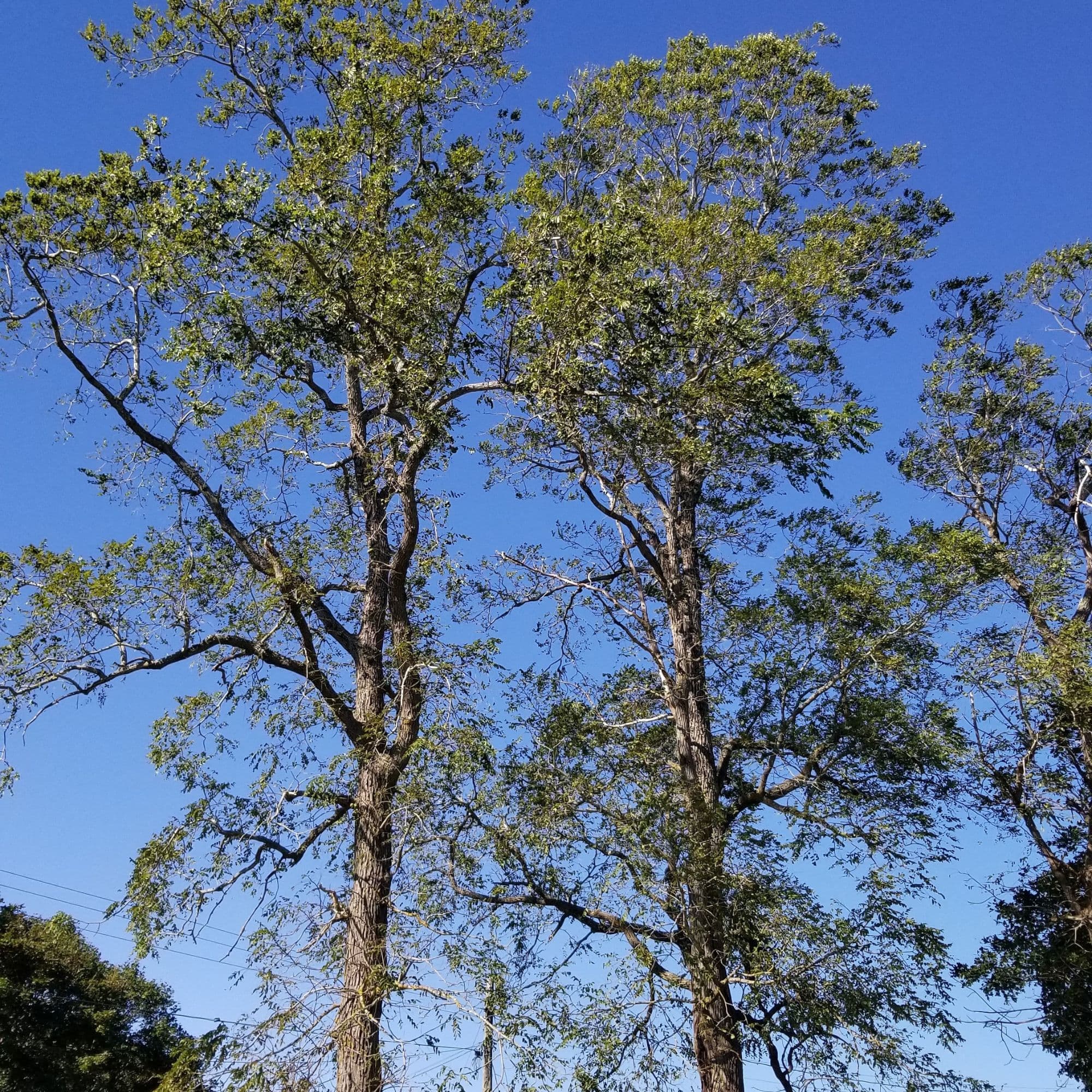
Here's the strategy that might genuinely deserve the "passive" label more than any other. Planting high-value hardwood timber — specifically black walnut — requires work upfront and then almost nothing for decades.
The full timeline of your active involvement:
- Spring of Year 1: Plant seedlings. One to two days per acre with a helper.
- Years 1–3: Control weeds and grass around the base of each tree. A few afternoons per season — you could hire this out for a couple hundred dollars per acre.
- Years 4 through 50: The trees grow. You do approximately nothing. Walk the property occasionally if you want to. You don't even have to.
- Harvest: Hire a logging crew. Sell timber. Cash the biggest cheque your land has ever produced.
At $8 per seedling and 222 trees per acre, your upfront cost is $1,776 per acre. Conservative harvest returns start at $25,000 per acre and go up to $125,000+ for premium veneer-quality timber. That's an investment-to-return ratio you won't find in most asset classes.
And between planting and harvest? Your annual time commitment is effectively zero. The trees don't need irrigation, fertilising, spraying, or management. They grow because that's what trees do.
See what the numbers look like for your property with our investment calculator.
Combining Strategies for Maximum Return
The smart play isn't always picking one strategy — it's stacking compatible ones. A few examples:
- Timber + hunting lease. Plant trees on the bulk of your acreage. Lease hunting access on the same land. The trees provide cover for wildlife, which improves the hunting, which justifies a higher lease rate. Everyone wins.
- Timber + camping. Designate a scenic corner of the property for camping rentals. Plant the rest in timber. Income from camping offsets property taxes while the timber grows.
- Farm lease + timber. Lease the good cropland to a farmer. Plant timber on the slopes, margins, or less productive areas. Rental income from the farm portion covers carrying costs while the timber builds long-term value.
The magic of these combinations is that they turn a cost centre (idle land) into something that covers its own expenses and builds an appreciating asset at the same time.
The Patience Premium
Real passive income from land requires one thing most people struggle with: patience. The highest-return option on this list — timber — takes 35 to 50 years. That's not a pitch for impatient people, and it shouldn't be.
But consider the alternative. In 35 years, your land will still be there. You'll either have 35 years of property taxes paid with nothing to show for it, or you'll have a mature timber plantation worth more than most people's retirement accounts. The time passes either way.
If you want to learn more about how timber investment works, our free planting guide covers the basics. For a broader look at land-use ideas, we've written about the best uses for old farmland in Canada and how to turn 5–10 acres into a long-term asset.
The land is already there. The only question is what you do with the time.
Topics covered:
Little Tree Farm Team
Nova Scotia nursery operators helping Canadian landowners transform unused land into generational timber wealth. We grow and ship premium black walnut seedlings across Canada.
Keep Reading
What to Do With Unused Land in Canada: 10 Smart Options
Thousands of Canadian landowners sit on acres that aren't doing anything. Here are 10 practical ways to put that land to work — and why timber might be the smartest long play.
10 min read →Article5 Ways to Make Rural Land Pay for Itself
Rural land shouldn't be a money pit. Here are five realistic ways to turn your property from a cost into a source of income — without becoming a full-time farmer.
7 min read →Quick ReadThe Biggest Mistake Landowners Make With Idle Property
The single most expensive thing you can do with idle property is nothing at all. Here's why inaction costs more than most landowners realize.
5 min read →